Bem Viver
“How this experience transformed me…”
I didn’t come to Brazil with a neat expectation. How does a non-protesting, reforming capitalist fly halfway across the world to lock arms with virtual strangers and find herself standing in solidarity on sacred ground? How does she step into a freedom struggle that is both ancient and immediate? And yet—just like magic—it happened.
From the moment our delegation gathered, the diversity among us was undeniable: abolitionists, capitalists, community organizers, advocates, communists, socialists… Black women who normally move in different political languages and separate arenas. But here, in this place, we understood the assignment. No matter our frameworks, the struggle was familiar to all of us. Across continents and cultures, the systems that break us—exploit us, silence us, extract from us—must be dismantled. And we must use every tool available to us, while learning to wield new ones as we evolve.
Throughout this experience, I felt the resonance between Black women across the diaspora—an echo that reminded me why spaces like the Black Women’s Roundtable, the Kiongozi Leadership Collective, Community College Preparatory Academy, and Prospering Places matter so deeply back home. This trip wasn’t a departure from my work; it was a widening of it. It sharpened my clarity: our fight for human rights, voting rights, bodily autonomy, civic power, and generational repair is global. And Black women are at the center of it everywhere.
As this journey comes to a close, I leave with a renewed charge—to build a better life (bem viver) for ourselves and for our children’s children, and to keep pushing for reparations that reconcile the damage done. I return to the States recharged, recommitted, and clear:
Black women are the answer.
We always have been.
But before home, I had 3.5-hour bus ride from Goiás, locale of our spiritual retreat and Thanksgiving dinner back to Brasilia’s international airport (BRB), a 10-hour flight and nearly 13 hour layover in Panama City, Panama. So—off we go!
The descent into Panama City surprised me. The skyline rose like a glass-and-steel proclamation, skyscrapers dotting the shoreline. It’s a dramatic contrast when you understand its history.
A Quick History Lesson: Old City vs. New City
Old Panama City (Panamá Viejo) was founded in 1519 and served as the first European city on the Pacific coast of the Americas. It thrived for more than 150 years before being destroyed in 1671 by the infamous pirate Henry Morgan. Those original ruins are what remain today—stone walls, cathedral frames, and crumbled towers that whisper the stories of colonial ambition and conflict.
After the attack, the city was relocated several miles away to the fortified peninsula we now call Casco Viejo or French Panama City. Built in 1673, it carried Spanish, French, and Caribbean architectural influences. For centuries, Casco Viejo remained the political, religious, and cultural heart of the country.
But the modern skyline—the one that greets you from the airplane window, bold and gleaming—is much newer.
Why the New Construction Took Off After 2006
Panama underwent a massive transformation starting in the mid-2000s due to several factors:
The Panama Canal Expansion (launched in 2006) kicked off a wave of foreign investment, infrastructure spending, and global attention.
Banking and finance deregulation made Panama an international hub for wealth management.
A targeted real estate boom, fueled by tax incentives for foreign buyers and retirees, led to rapid construction of high-rise condos and office towers.
The return of political stability in the early 2000s encouraged multinational companies to relocate regional headquarters to Panama City.
Tourism investment surged once Panama began marketing itself as the “Dubai of the Americas.”
By 2016, when the expanded canal opened, Panama City had transformed from a mid-sized capital into a globalized skyline—one still growing today.
So standing there, fresh off the plane, looking at both the ancient story of Old Panama and the modern energy of the new city, I felt yet another reminder of what is possible when a nation invests in its own infrastructure and long-term vision. The contrasts—old and new, destruction and rebirth, fragility and ambition—felt deeply familiar as a Washingtonian and as a woman committed to community transformation.
Panama City Layover Adventure
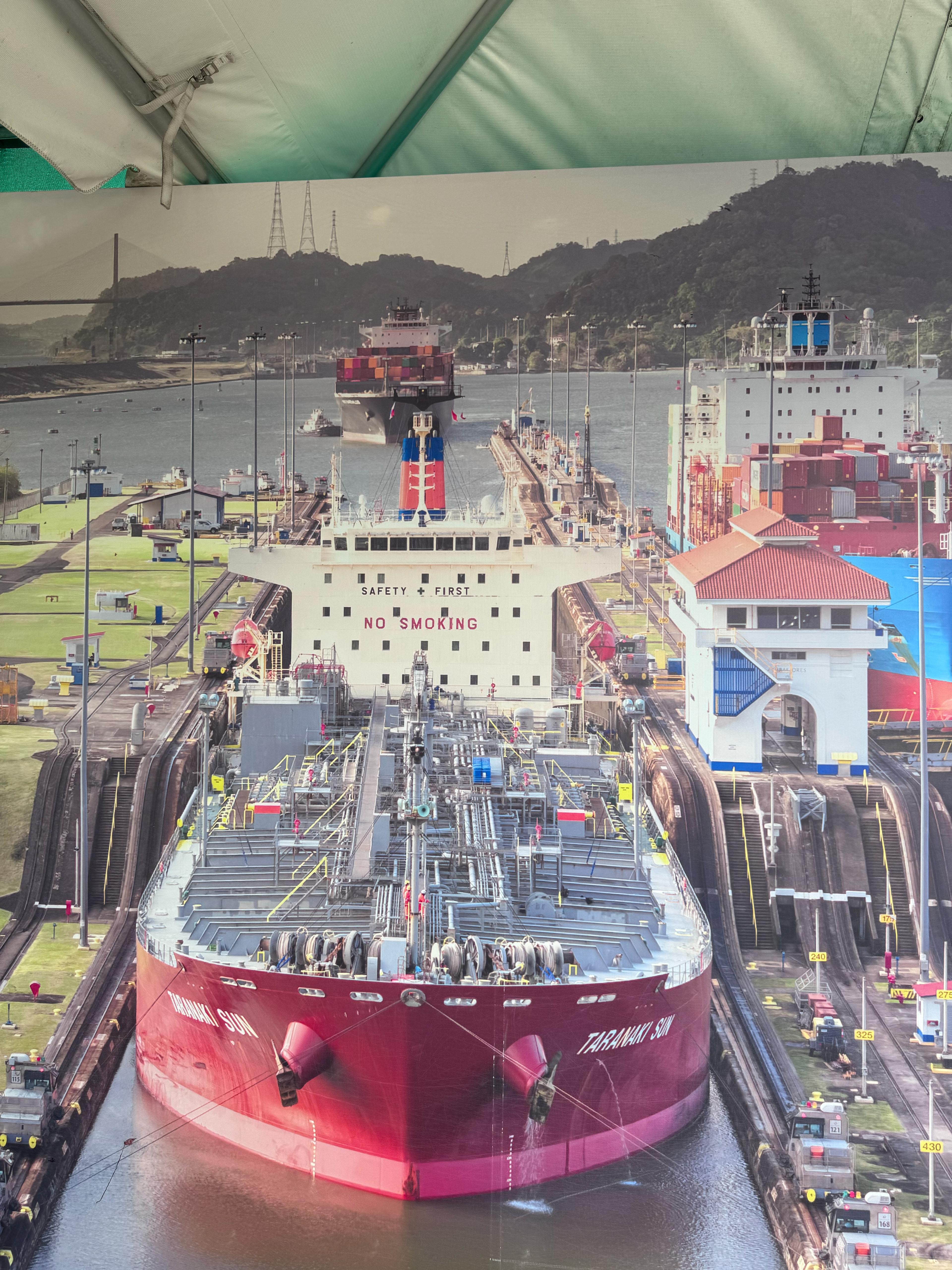
First Stop — Panama Canal
A marvel of engineering, ten times more awe-inspiring when witnessed in motion rather than studied in textbooks.
Second Stop — Old Panama City (Panamá Viejo)
Ruins that remind you how empires rise and fall—and how people continue.
Third Stop — Casco Viejo (French Panama City)
A living architectural blend of Spanish colonial, French influence, and Afro-Caribbean heritage.
Fourth Stop — Lunch
Whole fried snapper and seafood rice so fresh it could make a grown woman weep.
Fifth Stop — Airport
Back to wait for the final flight home—heart full, spirit stretched, purpose sharpened.
This experience transformed me—not by changing who I am, but by expanding who I am becoming. I leave Brazil with deeper conviction, wider sisterhood, and a renewed fire for the work I’ve been called to do. The march may be over, but the movement continues. And I am bringing every lesson, every tear, every joy, and every revelation back home with me.
Twende mbele. Let’s go forward.
Enjoy the sites and sounds of my Brasilia experience. Thanks again to our host - @HumanityUnited, @BWELGlobal and a special shout out to @DemetriaJackson and the Justice and Racial Equity group for your advocacy and curation of a “reckoning experience across the Diaspora”
Monica Ray